Task 1

Whole-Soil Experiments and Biogeochemistry

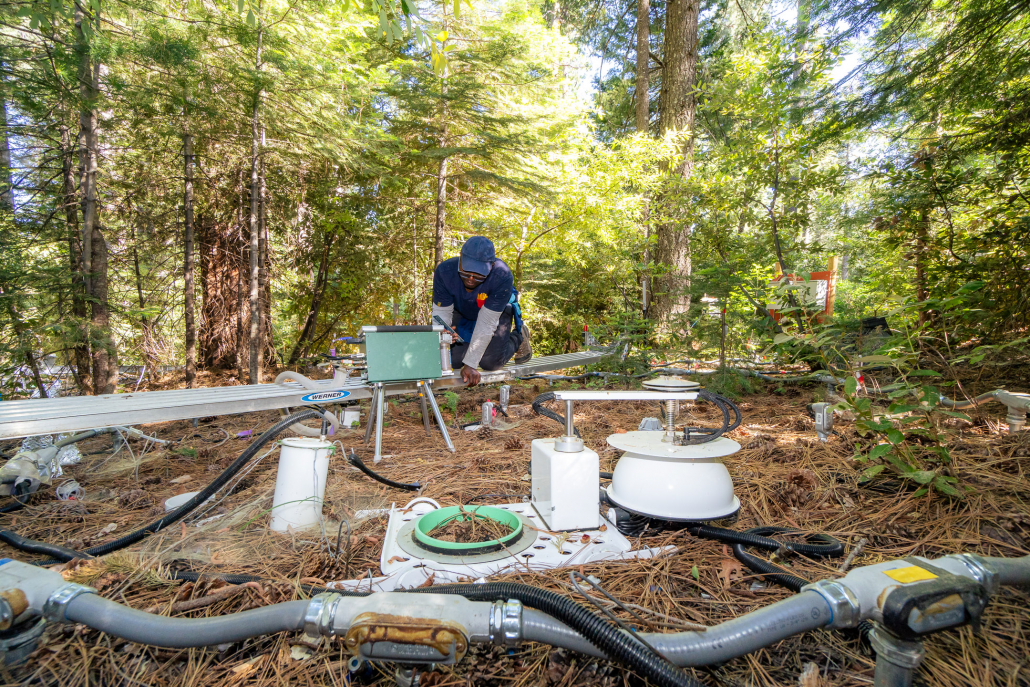
Task 1 creates and maintains long-term, whole-soil warming experiments in the field and measures emergent ecosystem responses to warming, such as soil CO2 respiration and nutrient availability. Results are showing that soil temperature has a large effect on decomposition and SOM composition at all depths. To study temporal responses, the SFA has added additional experimental plots seven years after the original started.
Task 2

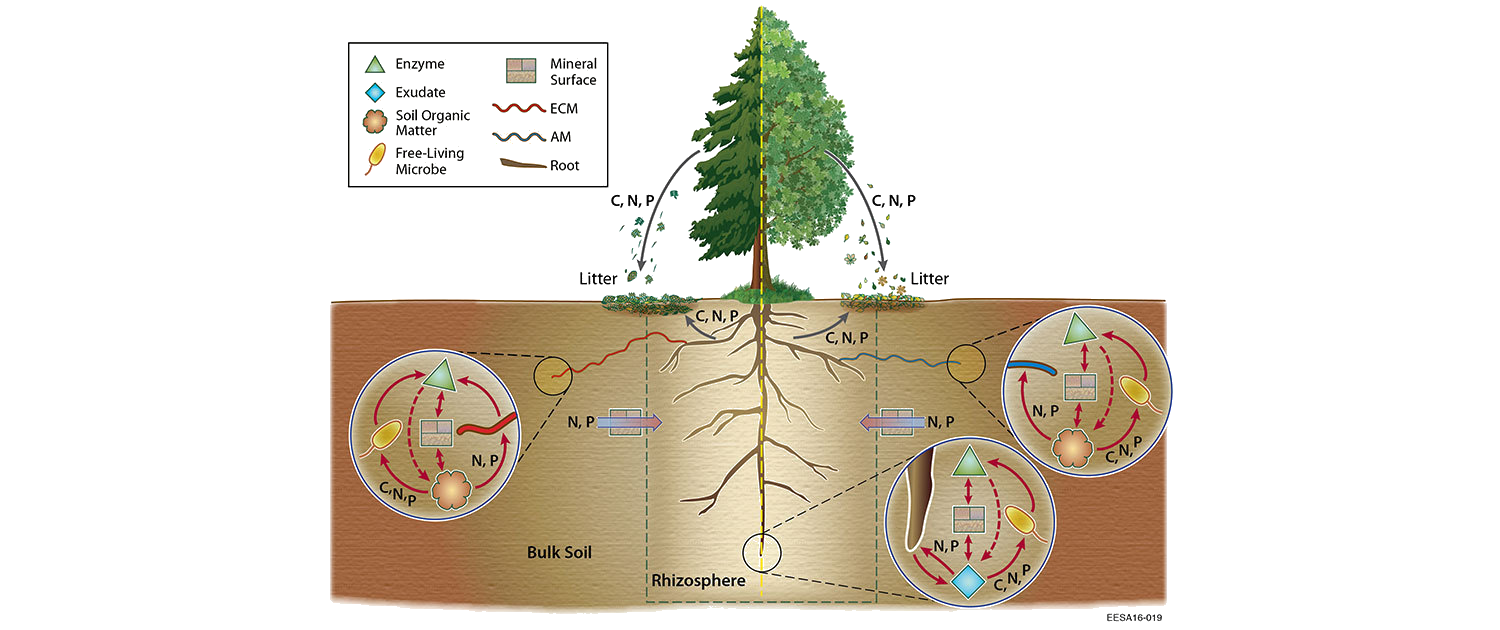
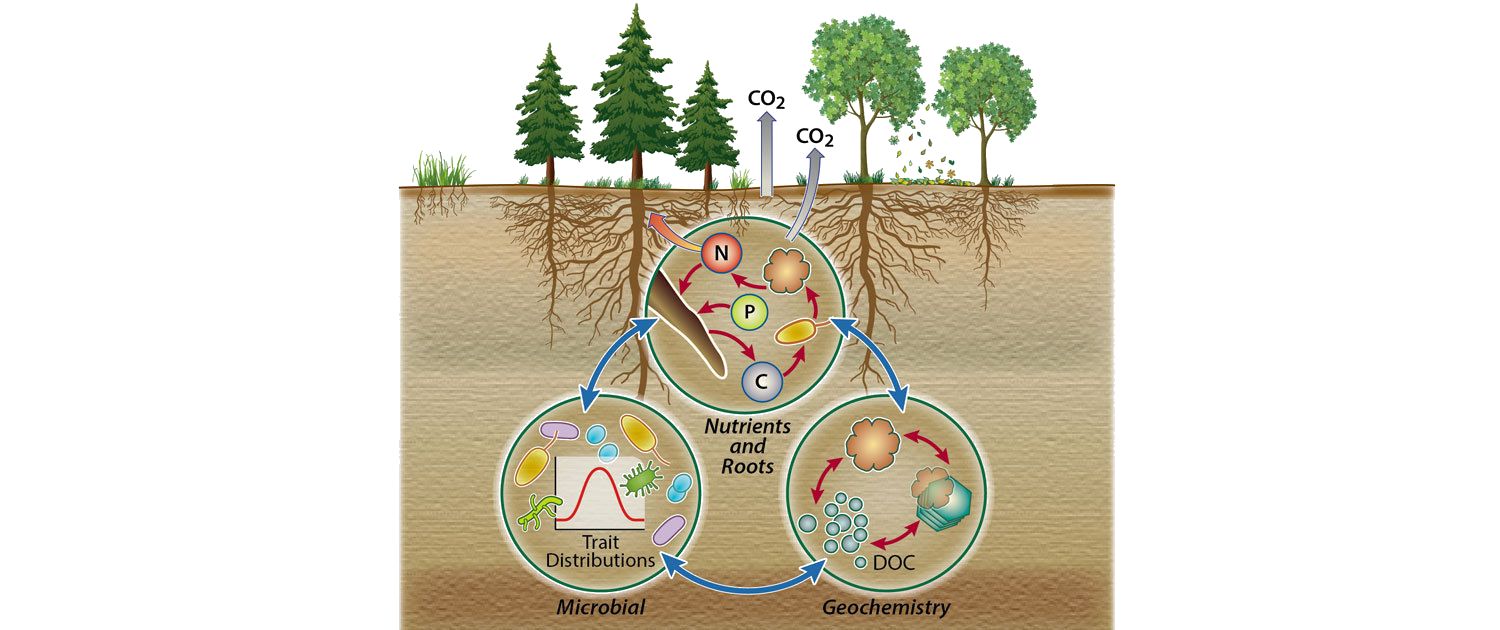
Microbial Responses and Feedbacks

Task 2 determines how soil microbial traits, physiology, and community properties vary over the soil profile and in response to environmental changes and investigates how they affect SOM mineralization rates, pathways, and products. SFA research indicates that warming results in a significant decline in microbial biomass in subsoils. Although warming stimulated microbial growth, subsoil microbes had lower carbon use efficiency, which contributed to greater carbon loss and decreasing biomass.

Task 3

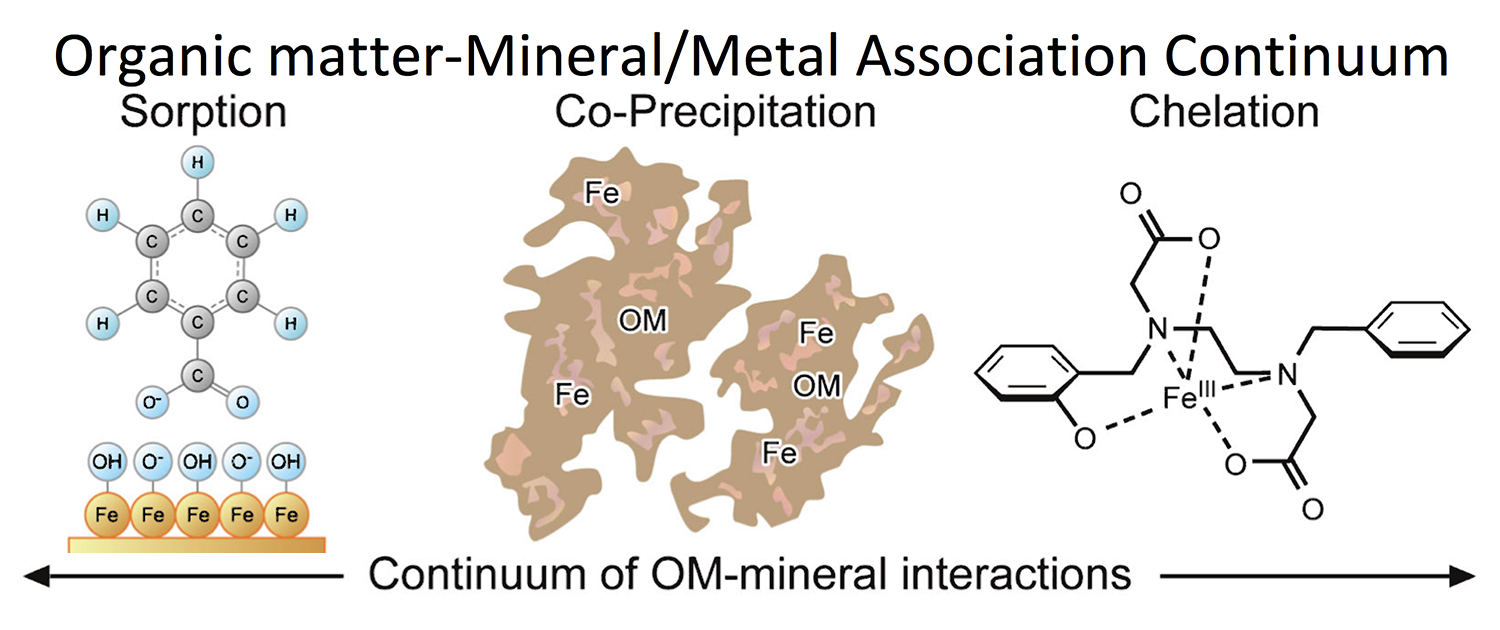
Organic Geochemical Controls on Soil Organic Matter Cycling

Task 3 examines how SOM chemical composition and the interactions of organic molecules with minerals and metals influence SOM availability to soil microbial transformations or leaching. In recent results, mineral stabilization explains long-term persistence of even the most labile substrates. Decomposition of labile substrates was effectively stopped when they were sorbed to mineral surfaces.

Task 4

Soil Biogeochemistry and Carbon Cycle Modeling

Task 4 improves modeling of decomposition, nitrogen cycling, and plant growth. New process representations, including for microbial activity, nutrient limitations, and the effects of moisture and temperature on organo-mineral interactions, are being incorporated into DOE’s ELM. This is important for benchmarking model performance against perturbation experiments and for exploring ecosystem dynamics from site to global scales. An international data synthesis activity co-led by the SFA will use results from similar warming experiments around the world to build understanding and evaluate models, thereby improving confidence in assessments of ecosystem carbon storage.

Task 5

Impacts of Wildfire and Warming
on Soil Biogeochemistry and Forest Regeneration

Task 5 explores the impacts of wildfire and soil warming on soil biogeochemistry and forest regeneration. The SFA is developing a novel rapid-response approach to experimental warming and plans to deploy it post-fire in a proof-of-concept experiment focused on belowground biogeochemistry and tree seedling establishment in a mid-elevation Sierra Nevada Forest.